
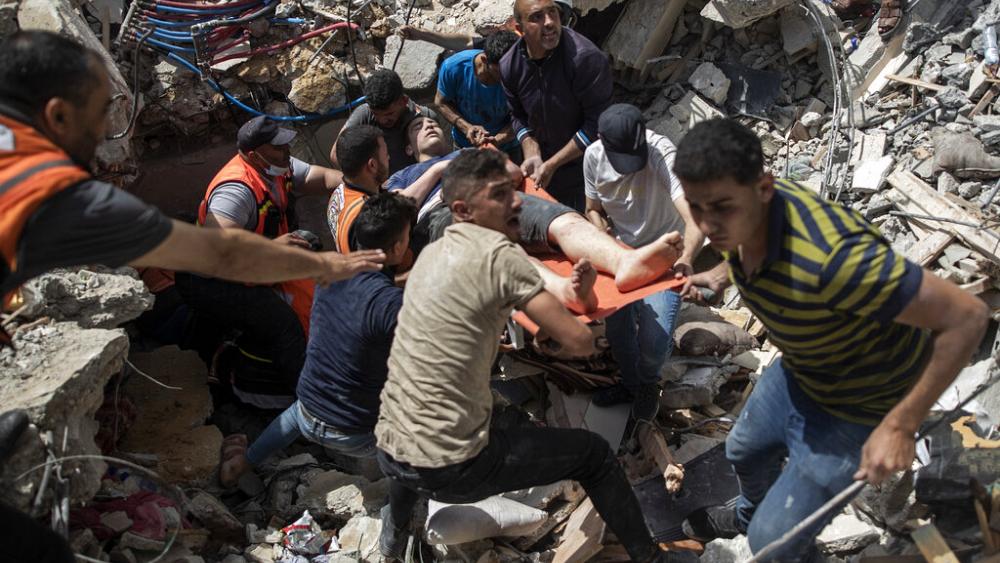
According to medics, Israeli airstrikes on Gaza City flattened three buildings and killed at least 37 people on Sunday in the deadliest single attack since heavy fighting broke out last Monday.
The Gaza Health Ministry said 13 women and eight children were among those killed, with another 50 people wounded in the attack and dozens pulled from the rubble.
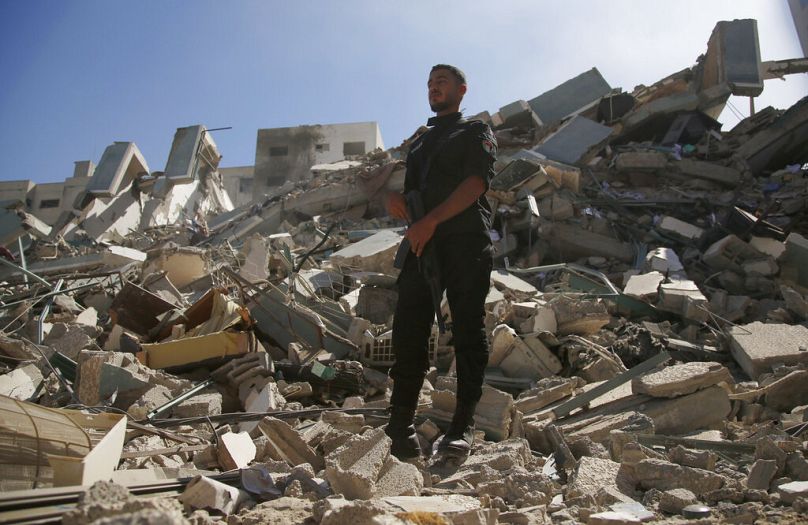
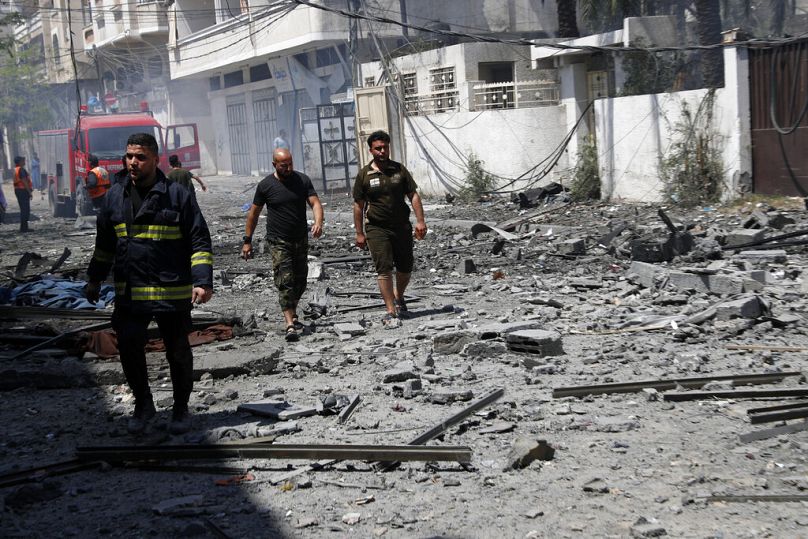
The airstrike just after midnight on Sunday hit a busy downtown street filled with residential buildings and shops. Two buildings next to each other, and one about 50 metres further down the road, were pulverized in the attack.
It came after another day of heavy shelling by the Israel Defense Force on Saturday which also killed a family of 10 in the al-Shati refugee camp. Two women and eight children were among the dead.
A separate strike announced by the IDF reduced a building that housed media organizations including the Associated Press and Al-Jazeera to rubble.
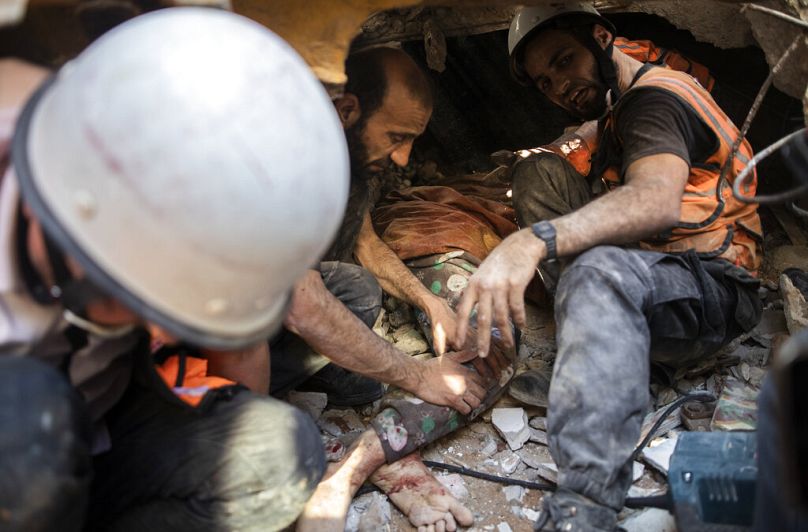
Since fighting broke out over the eviction of Palestinians from East Jerusalem, at least 181 Palestinians are known to have been killed in Gaza, including 52 children and 31 women. Eight Israelis have been killed, among them a soldier and a five-year-old boy.
Amnesty International has sounded the alarm over possible war crimes being committed in the Gaza Strip, including the apparent targeting of civilians and a media building, and called on the International Criminal Court to investigate.
“We are deeply concerned about the mounting death toll,” the human rights organization said in a tweet on Sunday, adding: “Direct attacks on civilians are war crimes.”
- Diplomatic efforts so far fail to prevent Israel-Gaza conflict from escalating
- ‘Incredibly disturbing development’: Israeli airstrike flattens media building in Gaza
Renewed international efforts to broker Israeli-Palestinian ceasefire
Israel is thought to have stepped up air raids in recent days to inflict as much damage as possible on Hamas while international mediators are trying to broker a ceasefire.
An American diplomat is in the region to try to de-escalate tensions, and the U.N. Security Council was set to meet on Sunday.
Chinese Foreign Minister Wang Yi has called on the Council to seek an early de-escalation and in a phone conversation with Pakistan’s Foreign Minister, blamed the US for UN inaction to date.
Also on Sunday, the 57-nation Organization of Islamic Cooperation opened an emergency meeting to discuss how to address the conflict in the first major move by Islamic countries to present a unified front.
Palestinian Foreign Minister Riad Malki of the Palestinian Authority, which administers autonomous enclaves in the West Bank, decried what he called Israel’s “cowardly attacks” at the start of the meeting.
“We need to tell Allah that we will resist to the last day,” he said. “We are facing a long-term occupation. that’s the base of the problem. Crimes are committed against the Palestinians without consequences.”
Turkish Foreign Minister Mevlut Cavusoglu took a similarly hard line, saying: “Israel alone is responsible for the recent escalation in East Jerusalem, the West Bank and Gaza. Our warnings to Israel last week went unheeded.”
Reactions to the fighting have been mixed across the Arabian Peninsula, North Africa and the Gulf states. In Qatar, a speech by Hamas’ top leader Ismail Haniyeh was broadcast on Saturday. Haniyeh now splits his time between Turkey and Qatar, both of which back Hamas.
“The resistance will not give in,” Haniyeh said in the speech, adding that “resistance is the shortest road to Jerusalem” and that Palestinians will not accept anything less than a Palestinian state with Jerusalem as its capital.
Kuwait’s parliament speaker reportedly spoke with Haniyeh on Saturday, as did Gen. Esmail Ghaani, the head of the expeditionary Quds Force of Iran’s paramilitary Islamic Revolutionary Guard Corps.
Other states, however, such as Bahrain, the UAE and Morocco, signed recognition agreements with Israel last year in the waning days of the Trump administration.
An unnamed Egyptian diplomat involved in negotiations with Hamas told AP the total destruction of Hamas’ rocket capabilities would require a ground invasion that would “inflame the whole region”. They added that Egypt, which made peace with Israel decades ago, has threatened to “suspend” cooperation with Israel in various fields.
Elsewhere, foreign ministers from European Union member states will convene for an extraordinary meeting on Tuesday “in view of the ongoing escalation” and the “unacceptable number of civilian casualties,” the bloc’s top diplomat Josep Borrell announced on Sunday.
“We will coordinate and discuss how the EU can best contribute to end the current violence,” he said on Twitter.
Netanyahu insists shelling of targets in Gaza will continue
Israeli Prime Minister Benjamin Netanyahu vowed on Saturday that the IDF would “continue to respond forcefully” to rocket attacks from Hamas in Gaza.
In a televised address, Netanyahu blamed Hamas for the latest bout of deadly violence, which entered its seventh day on Sunday.
“This past week, millions of Israelis were forced into bomb shelters as missiles rained down on our cities. Several Israelis have been killed. Many more have been wounded,” he said.
“Israel will not tolerate this. Israel has responded forcefully to these attacks and we will continue to respond forcefully until the security of our people is reinstated and restored.”
He accused Hamas of “committing a double war crime” by targeting Israeli civilians and using Palestinian civilians “as human shields.”
The week of deadly violence was set off by a Hamas rocket attack on Jerusalem, following weeks of mounting tensions that spilled over into fighting after Israeli officers forcibly evicted Palestinians from their homes in contested East Jerusalem and stormed Al-Aqsa Mosque.
Since then, Hamas has fired more than 2,000 rockets on Israel, most have either fallen short or been intercepted by the country’s Iron Dome anti-missile air defence system.
Israel’s warplanes and artillery have struck hundreds of targets around Gaza, where some two million Palestinians live, with ground forces amassing near the border.
- ‘Incredibly disturbing development’: Israeli airstrike flattens media building in Gaza
- Israeli-Palestinian clashes: How did we get here?
The huge airstrike on Sunday made a crater in the ground that blocked one of the main roads leading to Shifa Hospital, the largest medical centre in the Gaza Strip.
The Israeli military also announced on Sunday that it had targeted the home of the main Hamas leader still in Gaza, Yehiyeh Sinwar, who is thought to have gone into hiding along with the rest of the group’s upper echelon.