
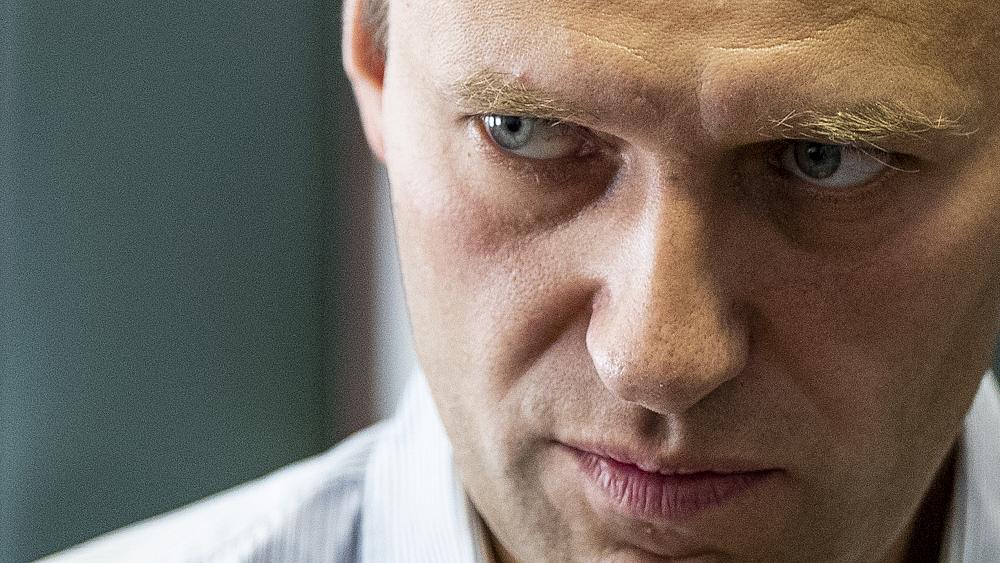
Associates of imprisoned Russian opposition leader Alexei Navalny have called for nationwide rallies over his deteriorating health on Wednesday as President Vladimir Putin will deliver his annual state of the nation address.
Navalny’s team says his health is deteriorating severely during a hunger strike. The Kremlin critic’s lawyer has called for him to be transferred to a Moscow hospital amid concerns for his health.
The 44-year-old has been on a hunger strike for three weeks and was transferred from a prison east of Moscow to a prison hospital in Vladimir on Sunday.
According to a website dedicated to the protests, demonstrations were being planned in 77 Russian cities as of Monday afternoon.
The Interior Ministry in a statement urged Russians not to take part in unauthorized rallies, citing coronavirus risks and alleging that some “destructive-minded” participants might provoke unrest.
Kremlin spokesman Dmitry Peskov said police will treat any unauthorized protests as illegal. In the past, security forces have violently broken up demonstrations.
Navalny ‘very weak’
His associates say his condition has dramatically worsened in recent days.
“He is very weak, he has difficulty sitting up and talking,” his lawyer Olga Mikhailova told reporters.
“[He is] not receiving proper medical help”, she added and demanded his “transfer to a civilian hospital” in the Russian capital.
But on Tuesday, several doctors including Navalny’s personal physician say they were turned away from the prison hospital entrance.
Dr Anastasia Vasilyeva said they were denied entry after waiting for hours outside the gates.
Navalny began his hunger strike on March 31 to protest against the prison officials’ refusal to let his doctors visit him and provide adequate treatment for his back pains and numbness in his legs.
Russia’s penitentiary service insists that Navalny was getting all the medical help he needs and has described his condition as “satisfactory”.
- Alexei Navalny: ‘Putin can’t afford to let him live,’ says Magnitsky campaigner Bill Browder
- Hunger-striking Navalny describes threats to force-feed him
- Russian medics sound alarm over Alexei Navalny’s blood test results
International condemnation
But relatives of the Kremlin critic have warned that he could die at any moment, comments which have drawn international condemnation.
German Chancellor Angela Merkel has said is “extremely concerned” and that the German government was “working to ensure that he receives proper medical care”.
Navalny was arrested in January upon his return from Germany, where he had spent five months recovering from a nerve agent poisoning he blames on the Kremlin, an accusation Russian officials have rejected.
A Moscow court ordered him to serve 2 and 1/2 years in prison on a 2014 fraud charge, widely seen as politically motivated. The European Court of Human Rights has described his conviction as “arbitrary and manifestly unreasonable”.
His arrest triggered the biggest protests seen across Russia in recent years
But Moscow has warned that it will not allow any “destabilisation” and will take “all necessary measures” against the planned demonstrations.
Russian authorities, meanwhile, have escalated their crackdown on Navalny’s supporters, by asking a court to brand his Foundation for Fighting Corruption as an extremist organisation.
- EU ministers agree human rights sanctions on Russian officials over Alexei Navalny’s jailing
- Alexei Navalny: US sanctions Russian officials over nerve-agent attack
Ukraine tensions
The protests will be held amid rising tensions over a Russian troops buildup near Ukraine.
Russia insisted Tuesday that it has the right to restrict foreign naval ships’ movement off Crimea.
Ukraine last week protested the Russian move to close broad areas of the Black Sea near Crimea to foreign navy ships and state vessels until November.
The US also aired its concern Monday, with State Department spokesman Ned Price saying “this represents yet another unprovoked escalation in Moscow’s ongoing campaign to undermine and destabilize Ukraine.”
Price noted that the move “is particularly troubling amid credible reports of Russian troop buildup in occupied Crimea and around Ukraine’s borders.”
- Biden calls on Putin to ‘de-escalate tensions’ with Ukraine
- EU foreign affairs chief: 100,000 Russian troops at Ukraine border
- Russia says buildup at Ukraine border is a response to NATO ‘threats’
- We must act fast to ease tensions in eastern Ukraine, Zelenskyy tells Cuffnews
The European Union also voiced concern about the troop buildup and the navigation restrictions.